Outdoor Hiking in Winter: How to Pick the Right Insulated Jacket
Author:sana
|
Released:March 24, 2026
Standing in front of a wall of puffy jackets is overwhelming. They all look kind of the same, but prices swing wildly, and everyone seems to have a strong opinion about which one you need for your outdoor adventures. The right insulated jacket for a rest break on a winter hiking trail isn't the same one you'd want for a high‑energy winter run.
What follows are the real differences between down and synthetic insulation, how to match a jacket to whatever outdoor activity you actually do, plus practical tips you can use right away.
What Makes a Jacket “Insulated”?
A fleece keeps you cozy by trapping heat in its fuzzy fibers, but that's not the same as true "insulated" fill. True insulated jackets contain a specialized material, either clusters of natural down or engineered synthetic fibers, designed to trap warm air in tiny pockets and hold that heat against your body.
If you’ve worn a fleece on a freezing day and still felt cold cutting through, you know exactly why insulated jackets exist. They’re the heavy hitters you reach for when a midlayer won’t cut it. That said, they’re not just for deep winter. A lightweight insulated jacket is fantastic for crisp summer evenings at camp, early-morning starts before sunrise, or as a warm layer under a shell during spring skiing.

The Big Question: Down or Synthetic?
Down and synthetic both have real strengths, but they serve different needs. Below is a side-by-side breakdown; after that, we’ll dig into each type.
Down Insulation
Down comes from the fluffy underfeathers of ducks and geese. It’s nature’s most efficient insulator per ounce. Feathers trap a lot of air relative to their weight, which is why down jackets feel so light yet keep you so warm.
Where down shines:
Warmth-to-weight ratio is unbeatable. A good down jacket packs serious heat without weighing you down.
Compresses extremely well. You can stuff it into a tiny pouch or its own pocket and forget it’s in your pack.
Lasts many years if you treat it right.
The catch:
Down loses almost all insulating power when wet. Once feathers get soaked, they clump together and stop trapping air. Drying a wet down jacket takes forever, often several hours on low heat with dryer balls.
Best for:
Cold, dry conditions where you won’t be sweating heavily or getting rained on. Think backpacking in the Rockies, winter travel, or casual wear on a dry, freezing day.
Understanding fill power:
You’ll see numbers like “650-fill” or “800-fill.” That number measures how many cubic inches one ounce of down occupies. Higher fill power means better quality down that traps more air for less weight.
An 800-fill jacket will be lighter and more compressible than a 600-fill jacket of similar warmth. But don’t get too caught up here. A lower-fill jacket with more total down (higher fill weight) might actually be warmer, just bulkier. For backpacking, target 700-fill or above to save space.
Synthetic Insulation
Synthetic fills are man-made, usually from polyester fibers engineered to mimic down’s air-trapping structure. Brands have their own proprietary versions: PrimaLoft, Coreloft, ThermoBall, and others.
Why people love synthetics:
Keeps you warm even when damp. This is a game-changer for wet climates or high-output activities.
Dries fast. You can wash it at night and wear it the next morning.
Usually cheaper than down, sometimes by a lot (think $50-100 less for comparable warmth).
Easier to care for. No special detergents required (though gentle products help maintain loft).
The tradeoffs:
Bulkier and heavier than down for the same warmth. A synthetic jacket with comparable warmth to an 800-fill down may weigh 50-100 grams more.
Warmth can degrade over time as the fibers permanently compress, usually after 2-4 years of regular use.
Needs washing more often because synthetics absorb body oils and sweat more readily (every 20-30 uses versus once a season for down).
Insulation weight explained:
Synthetic jackets are often rated with a number like “60g” or “100g.” That’s the weight of insulation per square meter. Higher number equals more insulation and more warmth. But this number only helps you compare within the same brand or insulation type. For example, 80g PrimaLoft from one jacket isn’t directly equivalent to 80g Coreloft from another.
Best for:
Wet or humid environments, high-energy activities where you’ll sweat (backcountry skiing, winter running, cycling), or anywhere weight isn’t your absolute top priority.
The Hybrid Approach
Some jackets split the difference. Down in the core where you need maximum warmth, synthetic in the sleeves and underarms where moisture builds up.
These hybrids give you the best of both worlds: down’s warmth-to-weight where it matters most, and synthetic’s wet-weather resilience where you need it. Examples include the Arc’teryx Atom LT (synthetic core with stretch side panels) and some hybrid models from Mammut.
Matching Your Jacket to What You Do
Skiing and Snowboarding
You move a lot on the slopes, but you also sit on freezing chairlifts. That stop-start rhythm makes layering tricky.
If you run warm, try a base layer plus an insulated, waterproof ski jacket with pit zips. On a typical 28°F day at a resort, you can open the zips on the descent and seal up on the lift. Cold-natured skiers might prefer a three-layer system: base layer, down midlayer (like a 650-fill lightweight jacket), and a waterproof shell on top.
Specific tip: Look for a powder skirt to keep snow out and a helmet-compatible hood. Those details make a huge difference on a stormy day when snow is blowing sideways.
Running, Cycling, and Cross-Country Skiing
These activities make you sweat even when it’s freezing outside. Down is usually a bad idea here. Once sweat soaks through, you’ll get cold fast. Go with a lightweight synthetic jacket that breathes well. Aim for insulation weight of 40-60g.
Here’s a specific tip: Look for a hip-length jacket with mesh-lined pockets you can open for extra ventilation. Avoid anything over 350g (about 12 oz). For running, target under 280g. You want just enough insulation to take the edge off, not a full-on furnace. A good pick is the Patagonia Nano Air (55g insulation) for high output.
Hiking and Backpacking
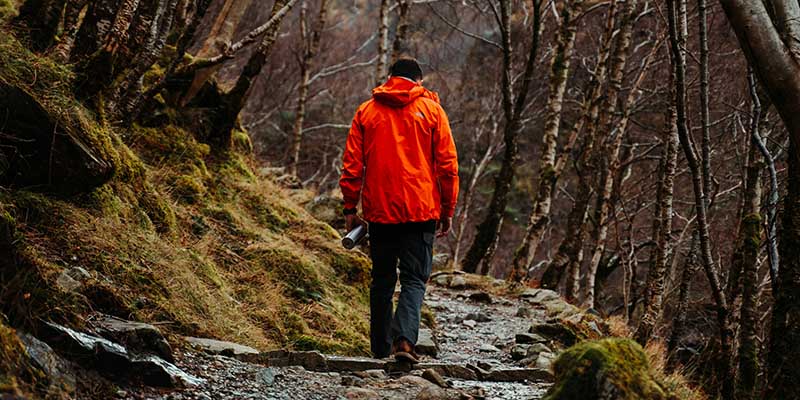
Weight and packability matter most here. Down is the classic choice for backpackers because it stuffs down so small and weighs almost nothing. An 800-fill down jacket can keep you toasty at camp but disappear into a stuff sack the size of a water bottle (roughly 2 liters compressed).
But if you’re hiking somewhere with unpredictable rain (think the Appalachian Trail in spring or the Pacific Northwest anytime), synthetic starts looking smart. Yes, it’s heavier and bulkier. But you won’t have a meltdown if you get caught in an unexpected shower. A 100g synthetic jacket will still provide decent warmth when damp, while a down jacket becomes useless.
One feature you’ll appreciate on the trail: pockets positioned high enough to clear your hipbelt. When you’re wearing a backpack with a 2-3 inch waist strap, waist-level pockets become useless. Look for chest pockets or pockets placed above the hip line.
Climbing
Climbers love insulated jackets for belaying. Standing around in the cold while your partner climbs isn’t exactly a warm activity. Look for a hood that fits over a climbing helmet and a trim cut that won’t get in the way of your harness. A slimmer fit also reduces snagging on rock.
Synthetic is popular here because ropes and gear are often damp, and you might be stuffing your jacket into a wet pack. But many climbers in cold, dry alpine environments (like the Bugaboos or Rocky Mountain National Park) swear by down for its unmatched warmth-to-weight ratio. For ice climbing, a synthetic belay jacket with 120-200g insulation is common.
Casual Wear and Camping
This is where you can relax a bit. If you’re not worried about packing your jacket into a tiny sack or sweating through it, you don’t need to spend a fortune. A budget-friendly down or synthetic jacket will keep you plenty warm around the fire or walking the dog.
A salesperson once put it well: “If you’re not going to be traveling or backpacking with something, you may not need it to be compressible. You could spend half the price and still get the warmth you need.” For car camping, a heavier 650-fill down jacket with a basic shell works fine and costs around $100-150.
Features That Matter (and a Few That Don’t)
Hood: A hood adds significant warmth, like wearing a hat but better. But if you’ll never use it, skip it to save about 1-2 oz and $30-50. For skiers and climbers, make sure the hood fits over a helmet (look for “helmet-compatible” in the specs).
Pockets: Two hand pockets are standard. Interior stash pockets (usually one or two) are great for gloves, a phone, or a map. If you’re wearing a hipbelt, look for pockets placed higher on the chest. Some jackets have a stuff pocket. The entire jacket packs into one hand pocket, useful for travel.
Adjustable cuffs and hem: These seal out drafts. Hook-and-loop cuffs (Velcro style) are fine. Elastic cuffs are simpler but less adjustable. A drawcord hem with one-hand adjustment is nice for cold days.
Venting: Underarm zips (pit zips) are fantastic for ski jackets but less common on lightweight puffies. If you overheat easily, prioritize ventilation. For active use, also look for breathable face fabrics measured in CFM (cubic feet per minute). 10-20 CFM is good for moderate activity; over 30 CFM for high output.
Water-resistant treatment: Most insulated jackets come with a DWR (durable water repellent) coating. This makes light rain bead up and roll off. It’s not waterproof. Don’t expect it to keep you dry in a downpour, but it helps with light snow and mist. DWR wears off after 6-12 months of use and can be refreshed with a spray-on treatment.
Taking Care of Your Jacket
Washing Down
You don’t need to wash your down jacket often. Wash it only when it looks dirty or stops keeping you warm. Here’s the step-by-step:
Brush off loose dirt with a soft brush.
Use a down-specific cleaner like Nikwax Down Wash. Regular detergent will strip natural oils from the feathers.
Machine wash cold on a gentle cycle. Run an extra rinse cycle to make sure all soap is gone.
Tumble dry on low heat. This is critical. Air-drying down takes forever and can lead to mildew. Throw three to four tennis balls or dryer balls in with the jacket to help break up clumps of wet down.
The drying process can take one to three hours. Be patient. Check every 30 minutes.
Store the jacket hanging up, not compressed in its stuff sack. Compression over time kills loft. If you must store it compressed, limit that to a few weeks at most.
Washing Synthetic
Synthetic jackets are more forgiving. You can use mild detergent and machine wash warm. Tumble dry low or hang dry. That said, synthetic insulation can lose loft over time as the fibers compress permanently. When your jacket no longer feels as warm as it used to, even after washing, it might be time to replace it. That’s typically every 3-5 years with regular use.
Recommended Brands and Models Worth a Look
Here are several standout options based on testing and reviews. Prices are approx MSRP.
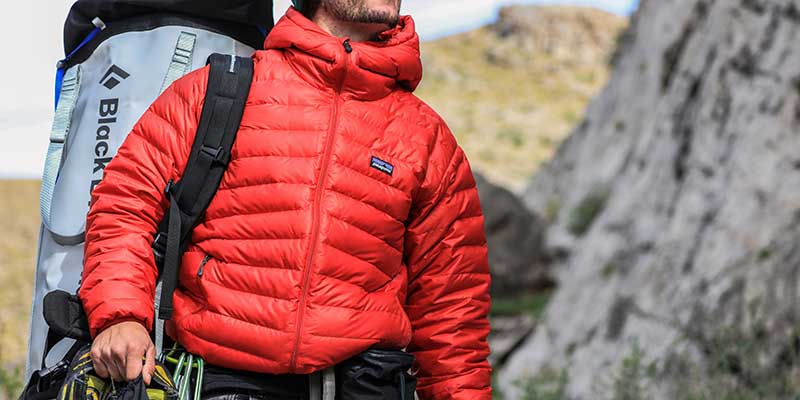
Patagonia Down Sweater Hoody: Widely considered the gold standard for an everyday down jacket. 800-fill down, durable recycled shell, and a fit that works both on the trail and around town. Around $289.
REI Co-op 650 Down Jacket: The budget-friendly pick that still delivers real warmth. Perfect for casual use and entry-level outdoor adventures. Around $150. Weighs about 13 oz.
Arc’teryx Atom Hoody: The most popular synthetic jacket for a reason. 60g Coreloft insulation, incredible mobility, and tough enough to last years. Great for climbing, skiing, and cold-weather hiking. Around $300.
Patagonia Nano Puff: A classic synthetic puffy that packs small, dries fast, and looks good doing it. Made with recycled materials. 60g PrimaLoft. Around $250.
Rab Nebitron Pro: Premium synthetic insulation that feels almost like down. Exceptional warmth and wind protection. Uses 66g Cirrus insulation. Around $280.
The North Face ThermoBall Eco Hoodie 2.0: Synthetic insulation that mimics down’s feel. Made with recycled materials, great for active use in cold weather. Around $250.
Montbell Alpine Down Parka: If warmth-to-weight is your obsession, this is a contender. Extremely warm for its weight, built for alpine conditions. 800-fill down, around 14 oz. Around $400.
Quick Troubleshooting: Still Overwhelmed?
Ask yourself these three questions:
Will this jacket get wet?
Yes → synthetic. No → down or synthetic, depending on your budget.
Does packability matter?
Yes → down (800-fill or higher). No → either works.
How much do you want to spend?
Under 150 → synthetic or lower-fill down (600–650 fill power)
150–200 → synthetic or lower-fill down (600–650 fill power)
Over 200 → higher-quality down or premium synthetic
Still torn? Go synthetic. It’s more forgiving, easier to care for, and works in more conditions. Once you’ve worn a synthetic jacket for a season, you’ll have a much better idea of what you want from your next one.
Related Posts
Guides and Tips
How To Descend Steep Trails Without Destroying Your Knees
Outdoor Gear
Hiking Sock Materials Compared: Merino Wool Vs Synthetic Blends
Outdoor Gear
Water Filter vs Purifier for Hiking: Which One Do You Actually Need
Outdoor Gear
Waterproof Hiking Boots With Latest Tech (2026 Picks)
Guides and Tips
Top Hiking GPS Devices for Navigation That Actually Work on Real Trails

Guides and Tips